Bayonne Pipeline Cleanup
Hyperion (see below) is performing environmental work under the supervision of the New Jersey Department of Environmental Protection (NJDEP) along a portion of the Bayonne Western Interceptor Sewer Pipeline. This project is part of Hyperion’s program for the remediation of chromium residue that was used to build the pipeline in the first part of the 20th century.
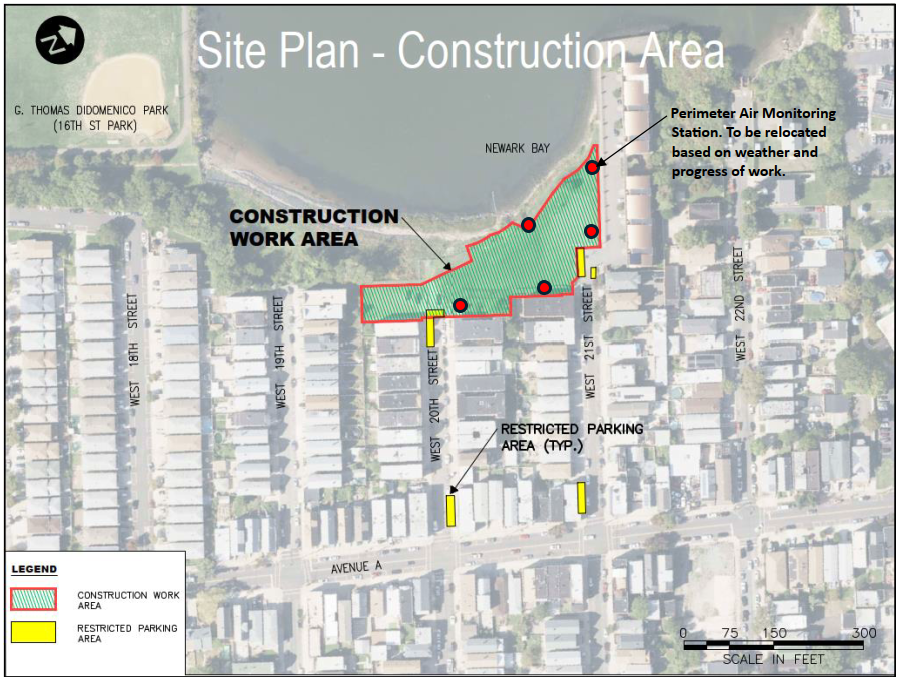
This project consists of excavating and offsite disposal of hexavalent chromium impacted soil from an approximately 5,800 square foot area. To maintain soil stability, a slide rail system will be used to excavate impacted soil and backfill in smaller sections. Excavated soil will be loaded onto trucks, and certified clean fill will be used for backfilling the excavation. The site will then be restored with grassy cover and asphalt
pavement.
INFORMATION
1
SCHEDULE & DATA
Work begins in early October and is scheduled to finish by the beginning of December. Hours of Operation are Monday – Friday from 8:00 am to 5:00 pm.
To view the data collected, select the View Data button below. Data from October 1, 2026, and October 2, 2026, is background prior to the start of construction activities.
2
HEALTH & SAFETY
This project is designed to protect the safety of the public, the workers, and the environment. The Master Health and Safety Plan and the Perimeter Air Monitoring Plan, which were reviewed and approved by NJDEP, are key parts of the cleanup. There will be robust dust control based on both visual observation and mechanical systems to control dust level thresholds to protect the public. In addition, there will be consistent wetting of soil and, if necessary, adjustments in excavation techniques. Throughout the project, erosion controls including filter socks and silt fences will be installed around the perimeter of the work area to protect the surrounding environment. Tracking pads and washing tires will be utilized to minimize any dirt tracking outside of the site.
3
AIR MONTIROING
The air monitoring system, which will operate during construction activities, will measure dust levels and chromium in air samples collected periodically at locations around the project perimeter. All monitoring will be conducted in accordance with a Perimeter Air Monitoring Plan, which identifies safe dust levels that protect human health. The monitoring system specifies pre-determined warning levels above which dust control actions must be taken to maintain air quality within the prescribed limits. The dust monitoring data will be verified by laboratory analysis of the confirmatory air samples for the duration of the project.
Monitoring Coverage